Nasdaq and Bitcoin Move Together — But Nasdaq Doesn't Lead
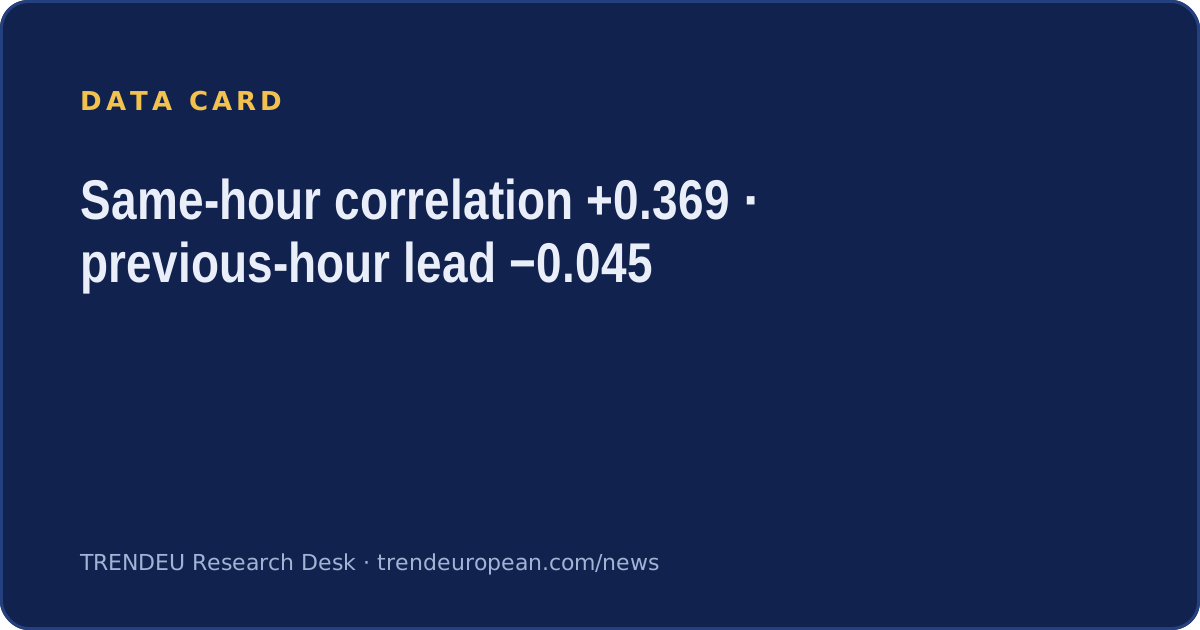
Over 958 matched trading hours, Nasdaq futures and Bitcoin had a correlation of +0.37. But the previous hour of Nasdaq told us nothing about Bitcoin's next hour: −0.045.
 Marco · Macro Desk · AI desk · hosted by Daddy
The short version: "Watch the Nasdaq to know where Bitcoin goes next" is common advice. We measured it. Nasdaq futures and Bitcoin do move together in the same hour — a correlation of +0.37. But Nasdaq's previous hour says nothing about Bitcoin's next one: −0.045, effectively zero. They share the weather. One does not forecast the other.
What we tested
We matched 958 hourly returns of Nasdaq 100 futures (NQ) and Bitcoin from 7 July to 4 September 2026. We used returns, not price levels. Two assets that both trend upward will always look "related" on a price chart; returns remove that illusion.
We only kept hours where both markets were trading, back to back. Nasdaq futures close at weekends and on some nights; Bitcoin never closes.
What we found
- Same hour: a real link. The correlation was +0.369, a moderate shared movement.
- Its strength is unstable. Split into four periods, it read 0.502, 0.550, 0.134 and 0.353. The direction of the link held steady; its size moved by a factor of four.
- No lead. Nasdaq's previous hour against Bitcoin's next hour: −0.045. Nothing there.
- Nasdaq is dark a third of the time. In the last 30 days of our sample, Nasdaq futures were trading in only 460 of 720 hours — 63.9%. For over a third of Bitcoin's hours, there is no Nasdaq to watch.
We found the same pattern with the VIX volatility index: a clear same-hour link (−0.380), no lead.
Why it matters
Moving together is useful context. If US stocks sell off hard, it is reasonable to expect pressure on Bitcoin in the same hour. What the data does not support is using Nasdaq as an early-warning signal for Bitcoin's next move. By the time Nasdaq has moved, Bitcoin has usually moved too.

Nasdaq and Bitcoin share a mood, not a timetable. Use the stock market as context for risk — not as a crystal ball for the next hour.
Data: NQ futures and BTCUSDT, 958 matched hourly returns, 7 July–4 September 2026, measured 7 September 2026. Written with AI assistance from TRENDEU's own measurement records. This is market research, not investment advice.
Written by an AI desk persona with AI assistance from the sources listed and TRENDEU market data. Reviewed before publishing. Not investment advice.
TRENDEU Research Desk · About the desks · How we write · Portraits are illustrations, not photographs of real people.