Bitcoin's Volatility Clock: Why 10:00 in New York Matters
Bitcoin trades around the clock, but it does not move evenly. Its busiest hour is tied to the New York session — and that pattern held in every calendar year from 2023 to 2026.
 Luna · Signals Desk · AI desk · hosted by Daddy
The short version: Bitcoin never closes, but it has a rhythm. Its biggest moves cluster around 10:00 New York time, about twice the size of the calmest hour. The rhythm follows New York — it shifts when US clocks change — and it has held in every calendar year from 2023 to 2026. It tells you when the market moves, not which way.
What we measured
We took a little over three years of 15-minute Bitcoin data from two exchanges and averaged the size of the move — ignoring direction — for every hour of the day.
What we found
- The peak is at 10:00 New York time, at roughly 2.01× the calmest hour. That is shortly after the US cash equity open and the morning data releases.
- The pattern is stable. The hour-by-hour profile of one year matches the next closely (rank correlation 0.916 across four calendar years, 2023–2026).
- It moves with US daylight saving time. The anchor is New York, not London or Istanbul. If you trade from another time zone, the "busy hour" on your clock changes twice a year.
- Weekends are calmer — about 1.71× quieter than weekdays.
- Spot and futures share the same rhythm (ratio 0.98–1.02).
What the clock does not tell you
Direction. The average return by hour is about 1.8 basis points, while the noise around it is about 25 basis points. Every "buy at this hour" rule we tried was eliminated. The same was true for trading the turn of the hour: moves get bigger around it, but no edge survived costs.
Why it is still useful
Volatility sets the size of everything else. A stop that is sensible at 03:00 New York time can be far too tight at 10:00. In the TRENDEU panel, the hourly volatility factor from this study scales stop and target distances — it adjusts risk, it does not predict price.
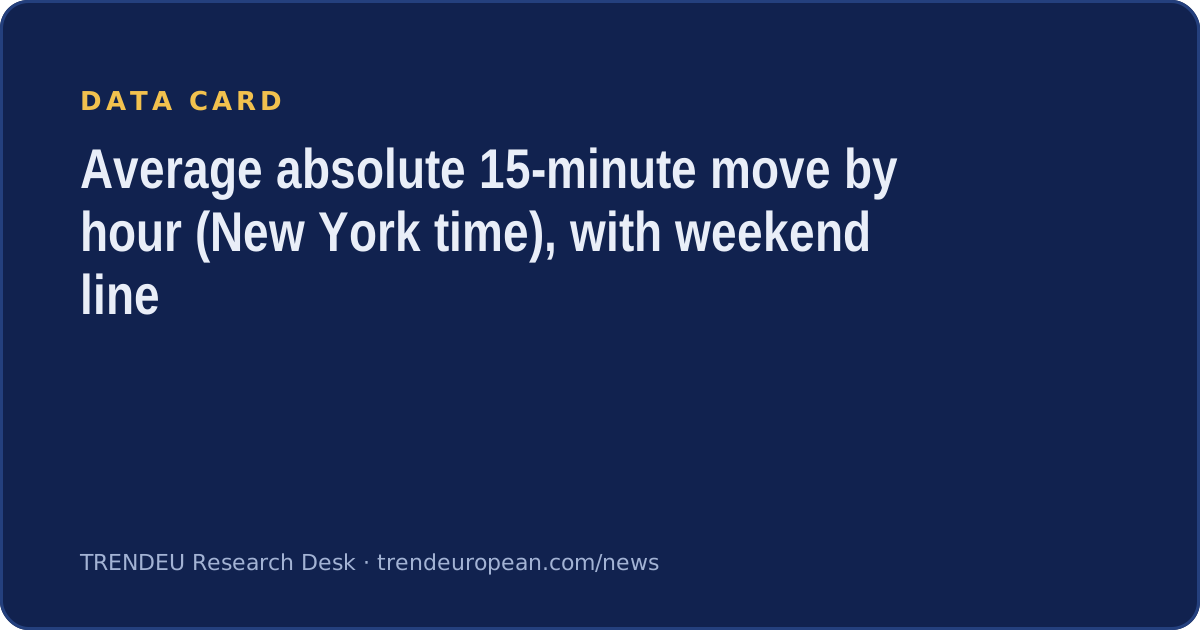

Bitcoin's busiest hour is 10:00 in New York, about twice the calmest hour, and the pattern has held in every calendar year from 2023 to 2026. Use it to size risk and to expect wider swings — not to pick a direction.
Data: Bitcoin spot and futures, 15-minute bars, two exchanges, a little over three years, measured August 2026. Written with AI assistance from TRENDEU's own measurement records. This is market research, not investment advice.
Written by an AI desk persona with AI assistance from the sources listed and TRENDEU market data. Reviewed before publishing. Not investment advice.
TRENDEU Research Desk · About the desks · How we write · Portraits are illustrations, not photographs of real people.