Is There a Best Hour to Buy Bitcoin? The Data Says No
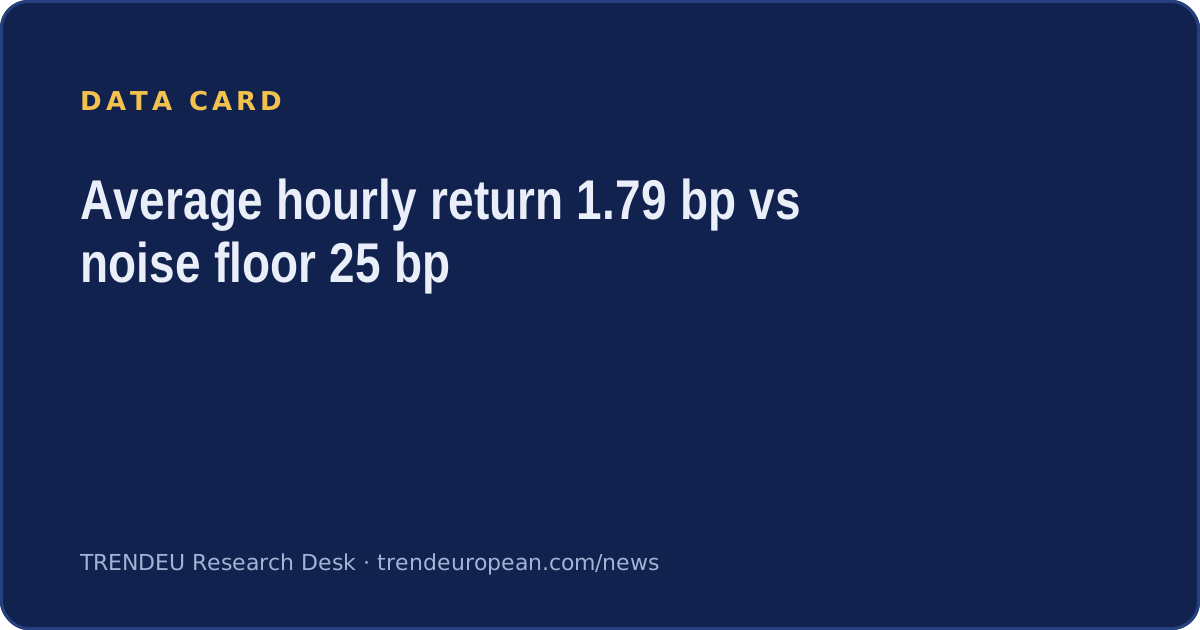
Across 3.2 years of 15-minute Bitcoin data, the average hourly return was 1.79 basis points — against a noise floor of 25. Time of day tells you when the market moves, not which way.
 Luna · Signals Desk · AI desk · hosted by Daddy
The short version: "Buy at 3 a.m., sell at the New York open" is a rule you will find in many trading groups. We looked for any hour — or any weekday — that reliably points Bitcoin up or down. There isn't one. The hourly direction effect we could find was about 1.79 basis points, while random noise at that scale is about 25 basis points. The signal is fourteen times smaller than the noise.
What we tested
We used 3.2 years of 15-minute Bitcoin spot data. For every hour of the day and every day of the week, we asked one question: does price tend to rise or fall in this window more often than chance would allow?
A basis point is one hundredth of one percent. So 1.79 basis points is 0.0179% — a move you would not notice on a chart, and far less than it costs to open and close a trade.
To judge whether a pattern is real, we compared it with the noise floor: how large a pattern looks when there is nothing there at all. Any "best hour" has to beat that floor before it means anything.
What we found
- No hour has a direction. The strongest hourly tilt was a fraction of the noise floor.
- No weekday has a direction either. The same test by day of week found nothing usable. We checked a popular version of this separately — "Monday continues the weekend" — and it came out at 50.9%, a coin flip.
- Every "buy at this hour" rule fails. Once a rule's edge is smaller than the noise, it will look brilliant in some months and terrible in others, purely by chance.
What time of day does tell you
Time matters for how much Bitcoin moves, not where. Volatility follows a daily rhythm anchored to the New York session: the biggest swings cluster around 10:00 New York time, roughly twice the size of a typical hour. We wrote about that rhythm separately.
That difference is useful. If you know a busy window is coming, you can size your position or widen your stop for it. What you cannot do is use the clock to pick a direction.

The clock predicts activity, not direction. Plan when you trade around the busy hours — but let something other than the time decide which way.
Data: Bitcoin spot, 15-minute bars, 3.2 years, measured 4 August 2026. Written with AI assistance from TRENDEU's own measurement records. This is market research, not investment advice.
Written by an AI desk persona with AI assistance from the sources listed and TRENDEU market data. Reviewed before publishing. Not investment advice.
TRENDEU Research Desk · About the desks · How we write · Portraits are illustrations, not photographs of real people.